7 Must-Have Wardrobe Staples Every Woman Needs
Build a closet that actually works without buying a completely new wardrobe.
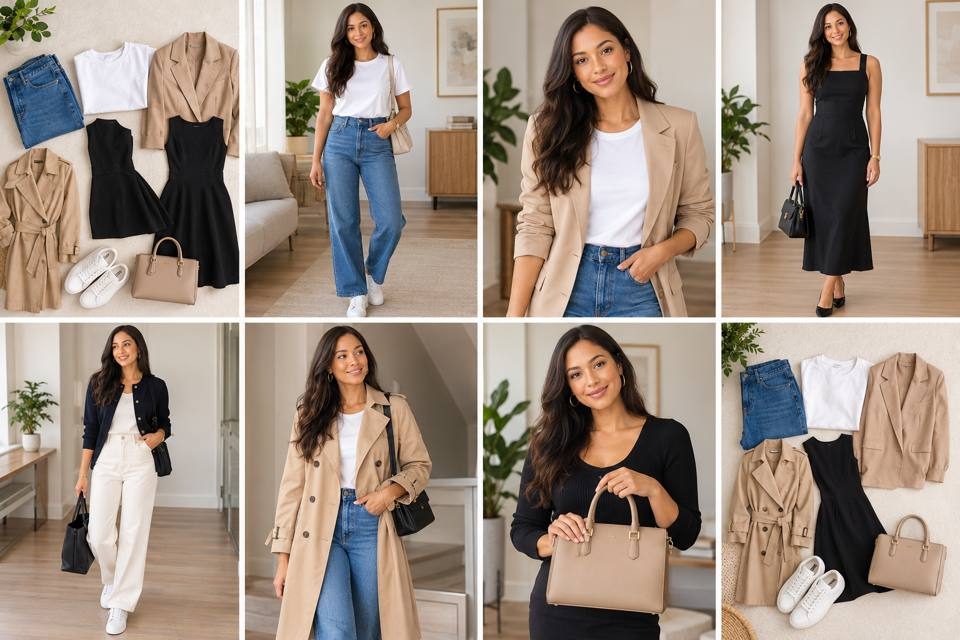
A closet can be full of clothes and still leave you standing in front of it thinking, “I have nothing to wear.”
Usually, the problem isn't that you need more clothes. You may simply be missing a few foundation pieces that make the clothes you already own easier to combine.
Wardrobe staples don't have to be expensive or designer pieces. They should be practical, comfortable enough for your real life, and useful enough that you can wear them repeatedly.
Here are seven pieces worth considering when you're building a wardrobe that works harder.
1. A Good Pair of Jeans
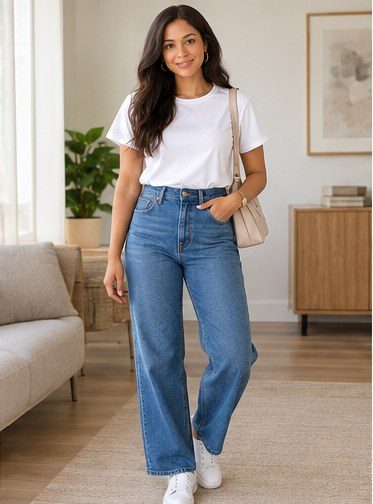
A pair of jeans that fits comfortably and works with several tops can become one of the most useful pieces in your closet.
For versatility, consider a straight-leg, classic high-rise, or wide-leg cut in a medium or dark wash. The best choice is the one that feels good on you and suits your everyday routine.
Why they're useful
Jeans can move between casual and polished depending on what you wear with them.
- A white T-shirt and sneakers
- A blazer and loafers
- A knit sweater
- A button-down shirt
- A simple blouse
Budget tip: Don't buy a particular jeans cut just because it is trending. Start with the shape you feel comfortable wearing and that works with the shoes and tops you already own.
2. A Crisp White T-Shirt
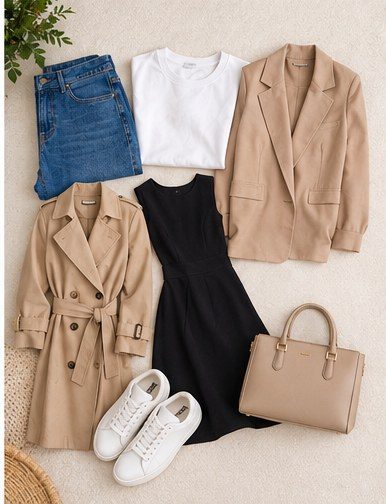
A plain white T-shirt might look too simple to matter, but that's exactly what makes it useful.
Look for one that is comfortable, holds its shape, and is opaque enough for how you intend to wear it.
Why it works
Think of the white tee as a blank canvas. You can wear it under a blazer, with jeans, with tailored trousers, with a midi skirt, or beneath another layer.
Styling idea: Tuck it into high-waisted jeans, add a belt and a blazer, and you've turned a very basic piece into a more polished outfit.
3. A Classic Blazer
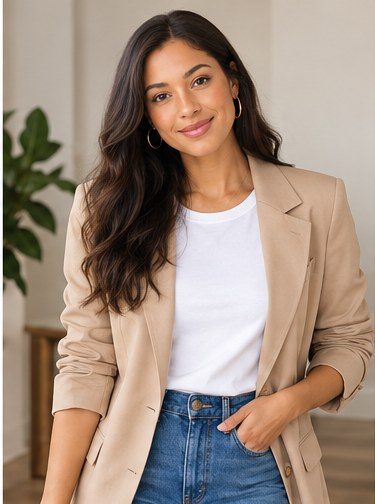
A blazer can change the impression of an otherwise simple outfit almost immediately.
For a first blazer, black, navy, beige, or another neutral is usually easier to combine with the rest of your wardrobe.
Why it works
A blazer gives you another layer and another way to change an outfit.
- White T-shirt + jeans + blazer
- Blouse + trousers + blazer
- Simple dress + blazer
- Knit top + skirt + blazer
You don't need an oversized collection of jackets. One well-fitting neutral blazer can cover a lot of situations.
4. A Little Black Dress — or a Versatile Black Piece
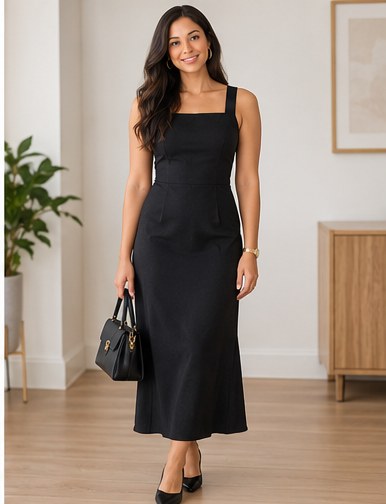
A simple black dress can be useful when you need an outfit that doesn't require much planning.
Choose a shape that fits your lifestyle rather than buying a dress simply because it is called a wardrobe essential.
One dress, two directions
Daytime: Black dress + white sneakers + denim jacket or another casual layer.
Evening: Black dress + heels + simple jewelry + structured handbag.
If you rarely wear dresses, don't force yourself to buy one. A pair of well-fitting black trousers can fill a similar role in a practical wardrobe.
5. White Sneakers
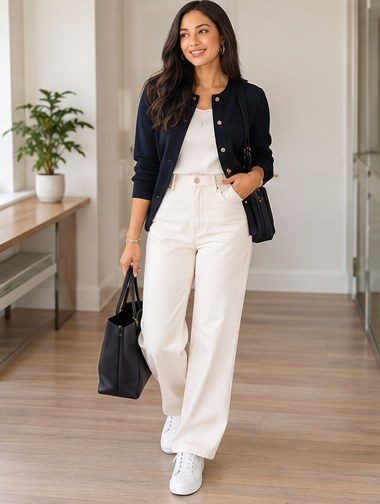
White sneakers can make dressier clothes feel more relaxed while keeping an outfit simple.
Try them with jeans, wide-leg trousers, midi skirts and casual dresses.
The important part: keep them clean. A simple, comfortable pair doesn't need to be expensive to be useful, but regular cleaning will help them stay presentable.
6. A Neutral Coat or Trench
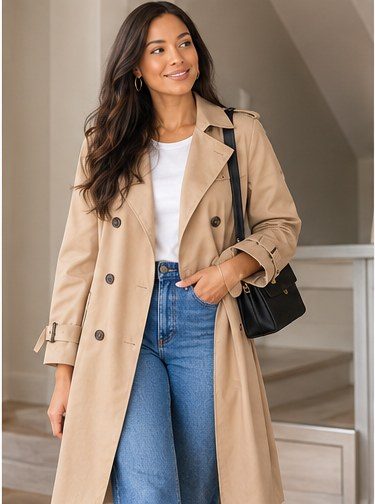
Outerwear can take up a lot of visual space in an outfit, so a neutral color can make it easier to wear repeatedly.
Think camel, beige, taupe, navy, gray, or black.
Why it works
A neutral coat or trench can sit over jeans and a sweater, trousers and a blouse, a black dress, or a simple T-shirt and tailored trousers.
If you live somewhere warm most of the year, you don't need to buy a heavy winter coat simply because it appears on a wardrobe-staples list. A lightweight trench, jacket, or other weather-appropriate layer may be much more useful.
7. A Good Basic Handbag
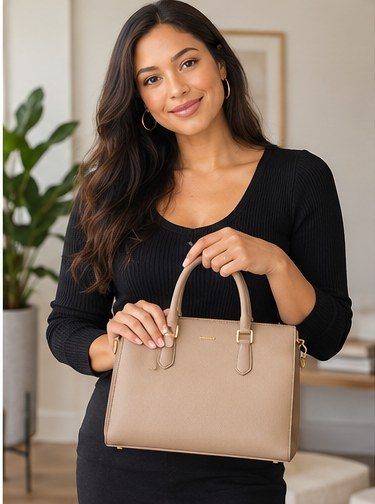
A handbag doesn't need to make a loud statement to be useful.
For an everyday bag, look for something that holds what you actually carry and works with several outfits.
Choose a color that works with your wardrobe
Black, brown, tan, beige, and other neutral shades can be useful starting points.
The most important question isn't “Is this bag trendy?”
Ask: “Can I use this with at least three or four outfits I already own?”
If yes, you're more likely to get regular use from it.
The Real Goal Isn't to Own All Seven
These seven pieces can be useful, but you don't need to rush out and buy them all.
Start by looking at your existing wardrobe. You might already own the jeans, white tee, blazer and sneakers. If so, your next purchase doesn't need to be another pair of jeans.
Instead, identify the actual gap.
“I have plenty of casual clothes, but I don't have a neutral layer that works with my office outfits.”
That's a much more useful reason to shop.
Think in Outfits, Not Individual Pieces
Before buying something, try connecting it to what you already own.
A simple question to use is: “How many outfits can I make with this?”
If a new blouse works with your jeans, black trousers, midi skirt and blazer, it has more potential than a beautiful top that only works with one outfit.
This is one of the basic ideas behind a capsule wardrobe: pieces should have more than one job.
For more practical ideas, read Essential Workwear Staples Every Woman Needs and How Many Pieces Should a Capsule Wardrobe Have?.
A Simple 7-Piece Starting Point
| Staple | Possible starting color |
|---|---|
| Jeans | Medium or dark blue |
| White T-shirt | White or cream |
| Blazer | Black, navy or beige |
| Black dress | Black |
| Sneakers | White |
| Coat or trench | Camel, beige or black |
| Handbag | Black, brown or tan |
These aren't strict rules. Your best colors will depend on your existing wardrobe, lifestyle, workplace, climate and personal taste.
Before You Buy Anything
Take ten minutes and look through your closet.
- What do I wear most?
- What do I keep reaching for?
- What outfits do I struggle to complete?
- Which piece would make several existing outfits easier?
Those answers are more useful than simply following a list of “must-have” items.
Final Thought
You don't need a huge closet to have plenty of outfit options.
Start with a few pieces that you genuinely wear, make sure they work with each other, and add new items when they solve an actual wardrobe problem.
The goal isn't to own the perfect seven pieces. It's to build a closet where getting dressed feels easier.
Which of these seven staples do you already have, and which gap are you trying to fill next?
This guide focuses on general wardrobe planning rather than specific brands or products, so you can adapt the ideas to your budget, location, climate and personal style.